

How to choose the right RV: An education for first time RVers
Thinking about escaping in a home on wheels that matches your lifestyle, budget and expectations? Well, the lifestyle can be rewarding, the budget variable and among your expectations, figure in that it’s just a walk in the park… well maybe if the park has rollercoasters! But seriously we want to get you fully prepped for enjoying amazing travel experiences, enjoying the highs and minimizing the lows. It’s all about preparation, from what you buy, how you buy it, how you prepare and use it and where you go. But before you trade your house keys for a set of wheels, let’s ensure your travel dreams align with your budget and lifestyle.
RVs come in all shapes, sizes, and price points. From budget-friendly pop-up campers under $7,000 to palatial Class A motorhomes exceeding $3 million! There’s something for everyone, and even if you are a billionaire, that $3 million class A motorcoach might be the worst choice for your travel plans and lifestyle. unless you’re a frugal billionaire, it makes sense to consider budget before moving on to how each type aligns with your travel style.
Before buying an RV we highly recommend you rent something similar. It need not be the exact model, just one close enough to what you intend to purchase. How long, one week and two campgrounds at the bare minimum. No amount of research can replace hands-on experience.
Caution: When buying from a dealer, the final price has a way of creeping up far beyond the unit price you negotiated. Don’t be rushed by any of the staff. Take your time and read all the fine print. Always ask for the Out-The-Door (OTD) price before signing anything. This ensures all fees are disclosed upfront.
Beyond the price tag, consider the lifestyle adjustments required for part-time or full-time RVing. This includes managing remote work, handling mail, securing appropriate insurance, and navigating daily logistics. Our articles on RV.org can help you make good decisions on all of these.
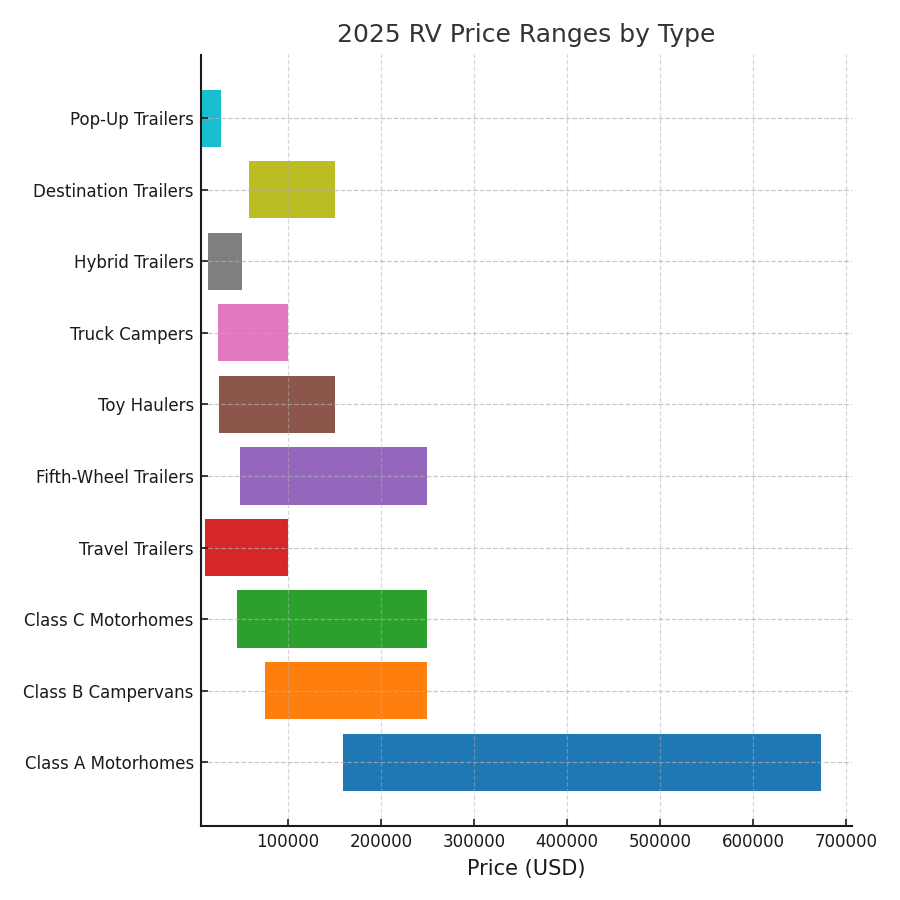
RV Price Ranges 2025
The graph shows general price ranges for different RV types, ignoring the outliers (extremes) of each.
1. Choosing the Right RV
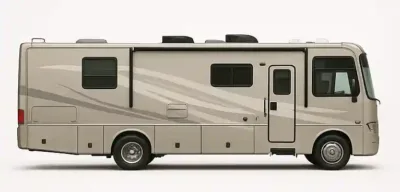
- Description: Large, luxurious motorhomes (25–45 ft) built on commercial chassis.
- Pros: Maximum space, luxury amenities, ideal for long-term stays, high cargo capacity, ability to tow.
- Cons: Expensive, poor fuel economy (6–10 mpg), difficult to maneuver in tight areas.
- Best For: Highways, RV resorts; limited in national parks and urban areas.
- New Price: Entry-level (gas) $100-200k, mid-range (diesel) 200-400k, luxury/high-end $400k–1 million+

-
- Description: Smallest RV type (16–24 ft), built on van chassis.
- Pros: Easy to drive/park, good fuel economy (15–20 MPG), great for couples or solo travelers.
- Cons: Limited space/storage, can be expensive.
- Best For: City streets, national parks, remote areas, stealth camping.
- New Price: Basic models 60-100k, high-end models $100-250k+

-
- Description: Towable trailers (10–35 ft) hitched to vehicles.
- Pros: Affordable, flexible (detach and use tow vehicle separately).
- Cons: Towing complexity, lower fuel economy (8–12 MPG when towing), setup required at campsites.
- Best For: Versatile camping, great for budget-conscious and families.
- New Price: Small (20–25 ft) $10-40k, large (30+ ft) $40-100k+
-
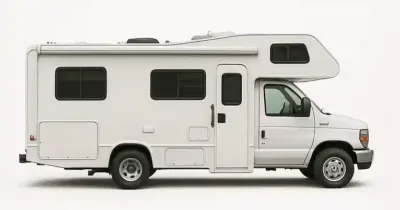
- Description: Mid-sized motorhomes (20–32 ft) with distinctive cab-over sleeping area.
- Pros: Versatile, family-friendly, moderate cost ($50k–$150k), easier to drive than Class A.
- Cons: Still bulky, limited urban parking, moderate fuel economy (8–13 MPG).
- Best For: Campgrounds, moderate off-road; good for families.
- New Price: Entry-level $70-120k, luxury models $120-300k+
-
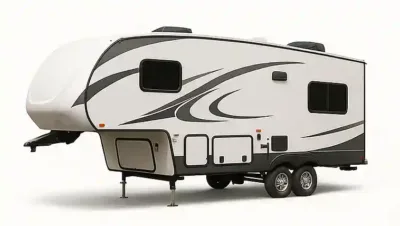
- Description: Large trailers (25–40 ft), towed via pickup truck bed hitch.
- Pros: Spacious interiors, residential features, stable towing.
- Cons: Requires powerful truck, difficult maneuverability in tight spaces, significant towing length (up to 50+ ft total).
- Best For: Extended stays, RV parks; limited off-road and urban use.
- New Price: Standard $30-80k, luxury $80-150k+
-
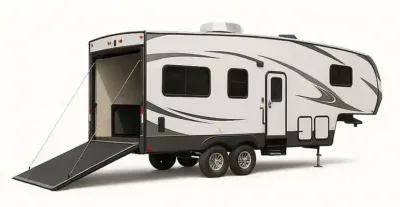
- Toy haulers represent a specialized category of RVs distinguished by their integrated garage space, designed to accommodate adventure gear while maintaining livability. Across different RV platforms, this garage feature adapts to various needs and budgets while serving as the defining characteristic.
- Travel trailer toy haulers offer the most accessible entry point, with a rear garage accessible via a ramp door that doubles as a loading platform. Their lightweight construction makes them towable by many SUVs, though garage space comes at the expense of living area when fully loaded.
- Fifth wheel toy haulers elevate the concept with multi-level floor plans where the garage becomes part of a more sophisticated living space. The increased square footage allows for larger garages that can store multiple vehicles while maintaining residential-style amenities in the living quarters.
- Class A toy haulers represent the premium segment, combining motorhome luxury with a fully integrated garage. These models feature high-end finishes throughout, including the garage area which is seamlessly incorporated into the coach’s design. The garage maintains easy access while being better insulated and more refined than in other toy hauler types. Across all categories, the garage remains the central feature that defines the toy hauler experience.
-
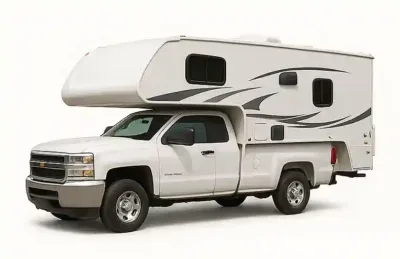
- Description: Self-contained units that slide into pickup beds, creating compact mobile living spaces with basic amenities.
- Pros: Excellent off-road capability, affordable, easy to maneuver, and don’t require separate towing.
- Cons: Very limited living/storage space, must be loaded/unloaded, minimal amenities.
- Best for: Solo travelers, outdoor sportsmen, and budget-conscious campers needing maximum mobility.
- New Price: Slide-in models $15-30k, high-end $30-60k+

-
- Description: Combine hard-sided bodies with pop-out tent ends to expand sleeping capacity while keeping weight low.
- Pros: Lightweight and easy to tow, more spacious than pop-ups, affordable entry point.
- Cons: Tent sections lack insulation, require setup/breakdown, less durable in bad weather.
- Best for: Families and casual campers wanting more space than tents but simpler than full RVs.
- New Price: $15-40k.

-
- Description: While not strictly a “Park-model” RV, these trailers are designed for long-term stationary use and have residential-style features.
- Pros: Spacious interiors, full-size appliances, comfortable for extended stays.
- Cons: Not meant for frequent travel, require heavy-duty tow vehicles to move. Owners may move these once or twice a year, or very rarely
- New Price: $40–150k+
Best for: Seasonal campers, retirees, and snowbirds wanting vacation home comforts.

-
- Description: Compact, collapsible campers with tent-like expandable sections for lightweight towing.
- Pros: Affordable, easy to store/tow, closer to nature feel.
- Cons: Less security/insulation, setup required.
- Best for: Casual campers, small families, budget-conscious buyers.
- New Price:Basic $10-20k, high-end (hybrid) $20-40k
2. Expense Breakdown
-
Financing:
RV loans are typically 10–15 years. We recommend a large down payment or cash transaction if your finances are tight to avoid your loan going “upside-down”, where you owe more on the RV than it is worth. (See Depreciation chart below) We recommend a minimum of 20%. Your RV loan interest may be tax deductible if it qualifies as your second home -
Maintenance:
A moving home typically requires more, and more frequent maintenance than your home. RV warranty options are recommended to prevent unbudgeted expenses. Do not expect your RV service to be like a car service. RV services usually need to be booked, and waiting for parts can sometimes take weeks or even longer. -
Storage:
Costs are entirely dependent on location and RV size. Research your location as we have found monthly storage can range from $30 to over $500 per month. -
Licensing & Taxes:
Generally a few hundred dollars annually from the DMV or state tax collector but varies by state and RV type, weight and value. Also be aware that if you plan to use an RV as a permanent residence, you may have to pay property taxes similar to owning a house. Some states have tax advantages and disadvantages depending on your use of the RV. If you want to RV full-time, choose your domicile state wisely.
Depreciation
| RV Type | 1 day | 1 yr | 3 yrs | 5 yrs | 10 yrs |
|---|---|---|---|---|---|
| Class A RV | 81% | 79% | 73% | 65% | 40% |
| Class B RV | 86% | 83% | 67% | 51% | 38% |
| Class C RV | 86% | 83% | 73% | 62% | 48% |
| Travel Trailers Fifth-Wheel |
85% | 82% | 75% | 63% | 55% |
Value of RV over time compared to purchase price
4. Lifestyle Considerations
Part-Time vs. Full-Time RVing
- Part-Time: Ideal for weekend or seasonal use; minor lifestyle changes.
- Full-Time: Requires careful planning around domicile, health care, mail service, downsizing, and daily logistics.
Key Factors for Full-Time RVing
- Domicile & Mail: Choose RV-friendly states like Florida, Texas, South Dakota.
- Taxes: You may have to pay up to 3.5% property tax on your RV if you don’t live in an RV-friendly state
See our related article State Tax Treatment for Full-Time RV Domicile - Healthcare
- Downsizing: Significant belongings reduction needed.
- Routine Life: Grocery shopping, laundry, routine maintenance in limited space.
- Expectations vs. Reality: Regular maintenance essential; close living quarters require good communication; slower travel pace recommended.
Overall, successful RV ownership means understanding the full scope of costs, selecting the right type of RV for your lifestyle, and realistically preparing for the joys and challenges of life on the road.
If you would like to dive deeper into all the details, read our
Comprehensive RV Buying Guide for Newbies